Finley Meier · 13 September 2026
Community Moderation Techniques That Enhance Participation Rates in Niche Discussion Sites
Community moderation techniques in niche discussion sites rely on structured approaches that researchers track through participation metrics and engagement data. These methods combine rule enforcement with user recognition systems, and they draw from studies on online group dynamics that show measurable increases in posting frequency when moderators apply consistent, transparent practices. Data from multiple platforms indicate that sites using a mix of automated flags and human review maintain higher retention rates over time, particularly in specialized forums focused on topics like hobbyist engineering or regional history.
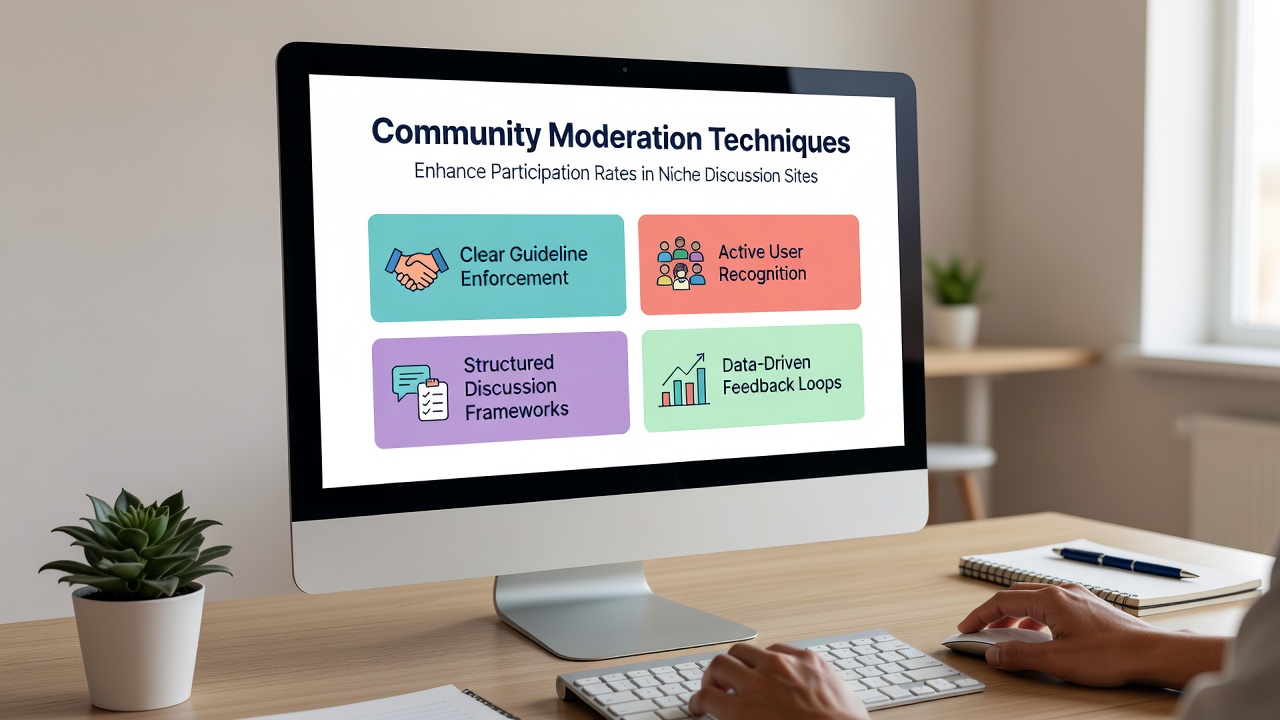
Structured Onboarding and Guideline Clarity
Effective moderation begins with clear entry points for new members, where administrators present concise rules alongside examples of accepted contributions. Research from academic institutions across North America and Europe reveals that forums providing template posts and topic-specific glossaries see initial comment volumes rise by notable margins within the first month. Moderators who update these resources quarterly, incorporating feedback loops from active users, create environments where participants feel equipped to contribute without repeated clarifications. In September 2026, several Canadian digital policy reports highlighted how such onboarding reduced rule-violation reports by integrating short video summaries of community standards directly into registration flows.
Recognition Systems and Positive Reinforcement
Systems that award badges, highlight quality contributions, and feature user spotlights correlate with sustained activity according to industry analyses from trade associations in Australia and the United States. These programs operate through visible leaderboards and automated notifications that acknowledge consistent participation, yet they avoid competitive ranking that might discourage casual contributors. Observers note that niche sites applying tiered recognition, such as granting editing privileges after verified helpful posts, record longer session durations and repeated logins. One study from a European research consortium documented how positive reinforcement loops, rather than punitive measures alone, shifted user behavior toward more frequent sharing of specialized knowledge in closed-interest groups.
Conflict Resolution and Neutral Facilitation
Moderators trained in de-escalation protocols handle disputes by separating factual disagreements from personal exchanges, which preserves thread continuity and encourages broader input. Figures from government-backed digital inclusion programs in the EU demonstrate that sites maintaining public logs of resolved conflicts experience fewer repeat incidents and higher trust signals in user surveys. Techniques include timed response windows for moderator interventions and rotating facilitation duties among experienced members, distributing workload while modeling constructive dialogue. When these approaches integrate with simple reporting tools, participation data shows reduced drop-off rates during contentious topics that often arise in tightly focused communities.

Data-Driven Adjustments and Adaptive Policies
Platforms that review participation analytics monthly adjust moderation thresholds based on actual posting patterns rather than fixed assumptions. Academic papers from Australian universities on digital communities indicate that adaptive systems, which test minor rule tweaks through A/B comparisons, sustain growth in active users over static approaches. Moderators track metrics such as reply depth and topic diversity, then refine welcome messages or content prompts accordingly. This process benefits from collaboration with external research bodies that supply anonymized benchmarks, allowing smaller sites to align tactics with larger trends observed across hobbyist networks.
Community involvement in moderation expands capacity through volunteer reviewer programs where long-term members receive limited tools for flagging issues. Trade group reports from gaming and enthusiast sectors note that these distributed models lower response times while maintaining consistency when paired with central oversight committees. Training materials distributed to volunteers emphasize factual assessment over personal judgment, which aligns with findings that sites employing peer review retain contributors who value shared ownership of standards.
Conclusion
Moderation techniques that combine clear guidelines, recognition mechanisms, neutral conflict handling, and ongoing data review produce documented lifts in participation across varied niche discussion environments. Evidence gathered from regulatory and academic sources in multiple regions confirms that consistent application of these elements supports steady user activity without requiring constant platform expansion. Sites that refine these practices through regular assessment continue to serve specialized audiences effectively as engagement patterns evolve.